
Defensible Location Narratives: The Evidence Layer Operations Are Missing
Operations don’t collapse because teams lack data. They collapse when teams can’t agree on what happened, where it happened, and when it happened—especially in the messy seams of real work: dense yards, covered loading zones, mixed indoor–outdoor transitions, below-grade areas, and constraint-heavy sites. Most organizations have built “evidence” around one modality: video. Video is valuable, but it’s not sufficient. The missing layer is location evidence: a defensible location narrative that holds up under operational stress and doesn’t vanish when the environment stops cooperating. That’s the difference between visibility and proof.
Juxta
Juxta Team
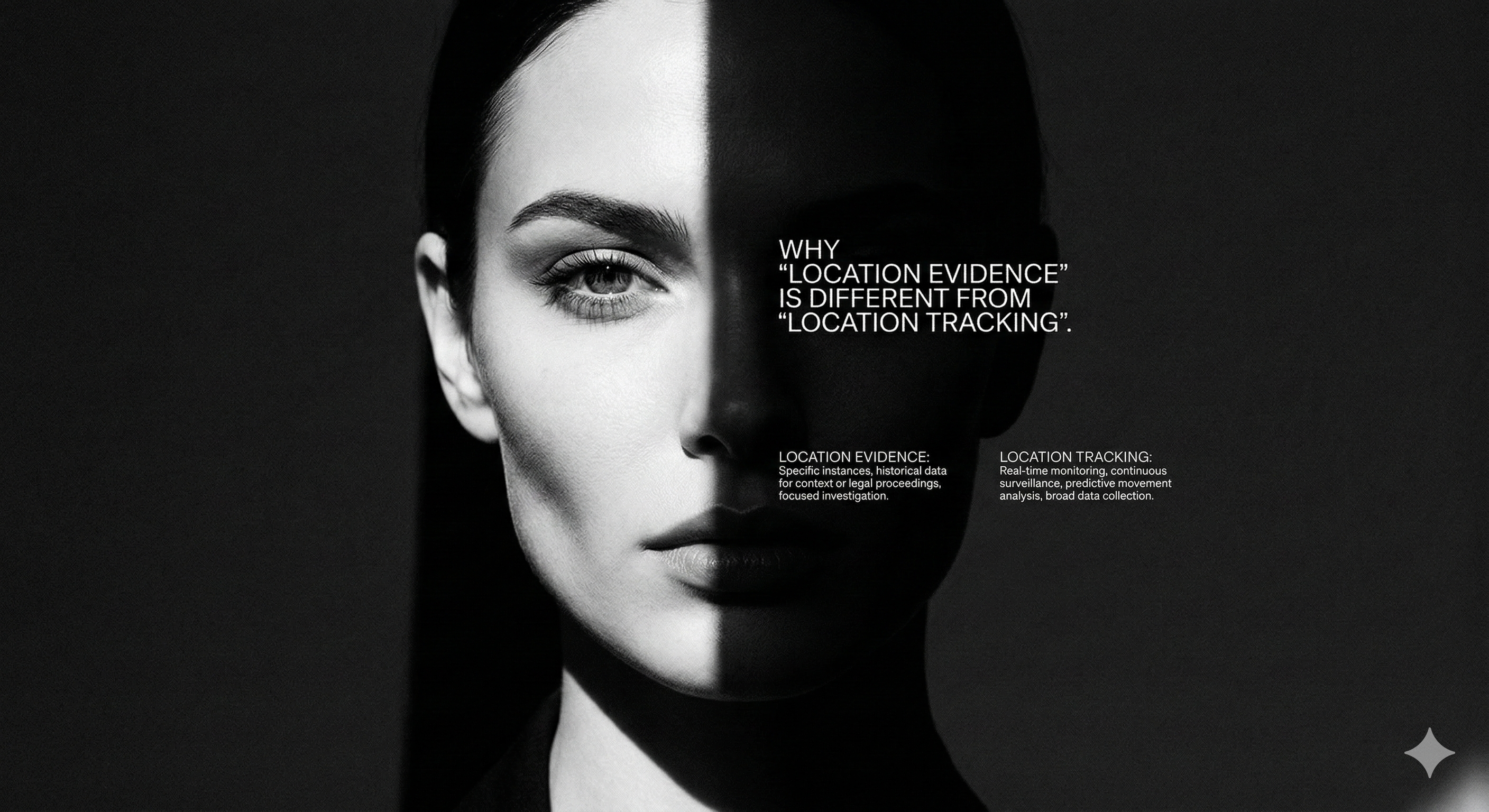
Why “location evidence” is different from “location tracking”
A dot on a map is not a narrative.
A narrative answers the questions that drive decisions, disputes, and cost:
Where was the asset, vehicle, or crew at the relevant time?
How confident is that location given the environment?
What changed in the moments before and after the event?
In many stacks, the location record becomes uncertain exactly when it matters most. The signal degrades, the story fragments, and organizations revert to manual reconstruction. That is the moment evidence turns into argument—and argument turns into cost.
The operational seams where narratives break
The most expensive events don’t happen on clean highways under ideal conditions. They happen around complexity:
Yards where congestion compresses movement into tight geometry.
Terminals where indoor and outdoor workflows blend.
Covered zones where conventional assumptions become ambiguous.
Below-grade environments where satellite dependency is a liability.
If a system can’t sustain a location narrative across those seams, it cannot function as evidence. It can only function as a convenience.
UPS as the proof layer
Universal Positioning System is a category move: treat positioning as a primitive, not a feature.
When positioning is universal, the location narrative becomes stable enough to be used as proof, not just as a hint. Teams stop debating “where” and start solving “what now.” Disputes resolve faster because the location record isn’t brittle. Exceptions shrink because uncertainty shrinks.
This is not a promise of perfect precision in perfect moments. It’s a promise of continuity—the property that makes a narrative trustworthy in imperfect conditions.
What leaders should demand
If you’re evaluating systems that claim “visibility” or “tracking,” ask whether they can produce a defensible location narrative:
Does the location story remain coherent across the operational seams where work actually happens?
Does the system preserve confidence when conditions degrade, or does it collapse into “last known”?
Does it reduce dependency surface area, or does it require the environment to behave?
The business outcome
Defensible location narratives reduce the cost of ambiguity:
Fewer hours spent reconstructing events.
Faster resolution of disputes and exceptions.
Less downtime caused by search behavior and uncertainty.
A more reliable operational record that holds up when stakes rise.
That’s not a dashboard improvement. It’s an evidence layer—and it’s what the next era of operations will treat as non-negotiable.