Juxta at TPM 2026 | The Future of Positioning in Logistics
From terminals to warehouses, TPM 2026 made one thing clear: operators need reliable positioning in the environments where GPS falls short. If your team is rethinking visibility across warehouses, terminals, yards, or industrial environments, book a demo to see how Juxta brings infrastructure-free positioning into real operations.
Juxta
Juxta Team

TPM 2026: Maritime & Logistics Leaders Talk About the Future of Positioning
Earlier this month, Juxta was on the ground at the Trans-Pacific Maritime Conference (TPM) 2026 in Long Beach, connecting with leaders across logistics, warehousing, freight, and industrial operations. While TPM is known for global shipping and supply chain conversations, one theme surfaced again and again in our meetings: operational visibility still breaks down in the places where execution matters most.
For Juxta, that made TPM an especially important event.
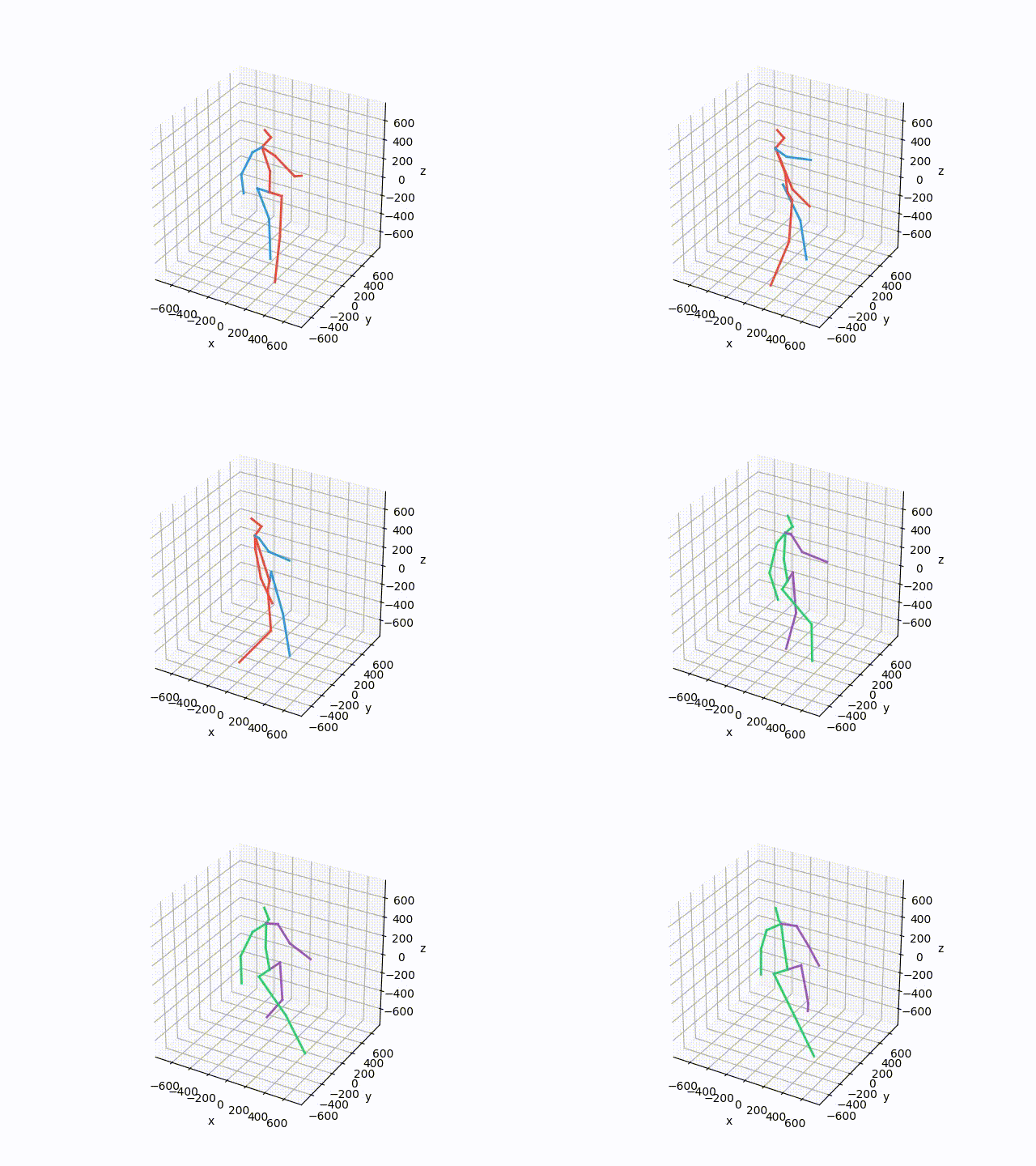
Across warehouses, yards, logistics hubs, and manufacturing environments, teams are still forced to operate through gaps in visibility. GPS weakens indoors and around covered structures. Hardware-heavy alternatives create cost, maintenance burden, and deployment friction. And the result is a familiar operational pattern: delays, search time, staging confusion, and slower coordination when conditions get messy. That exact problem is what Juxta is built to solve with infrastructure-free positioning powered by on-device sensors and software-defined deployment.
A Clear Signal from Logistics and Industrial Operators
At TPM, Juxta met with organizations spanning freight forwarding, warehousing, intermodal transport, trucking, industrial intelligence, and public-sector technology distribution. The strongest conversations centered on a simple question: how do you maintain reliable location awareness when operations move beyond clean outdoor GPS assumptions?
That question showed up in multiple forms:
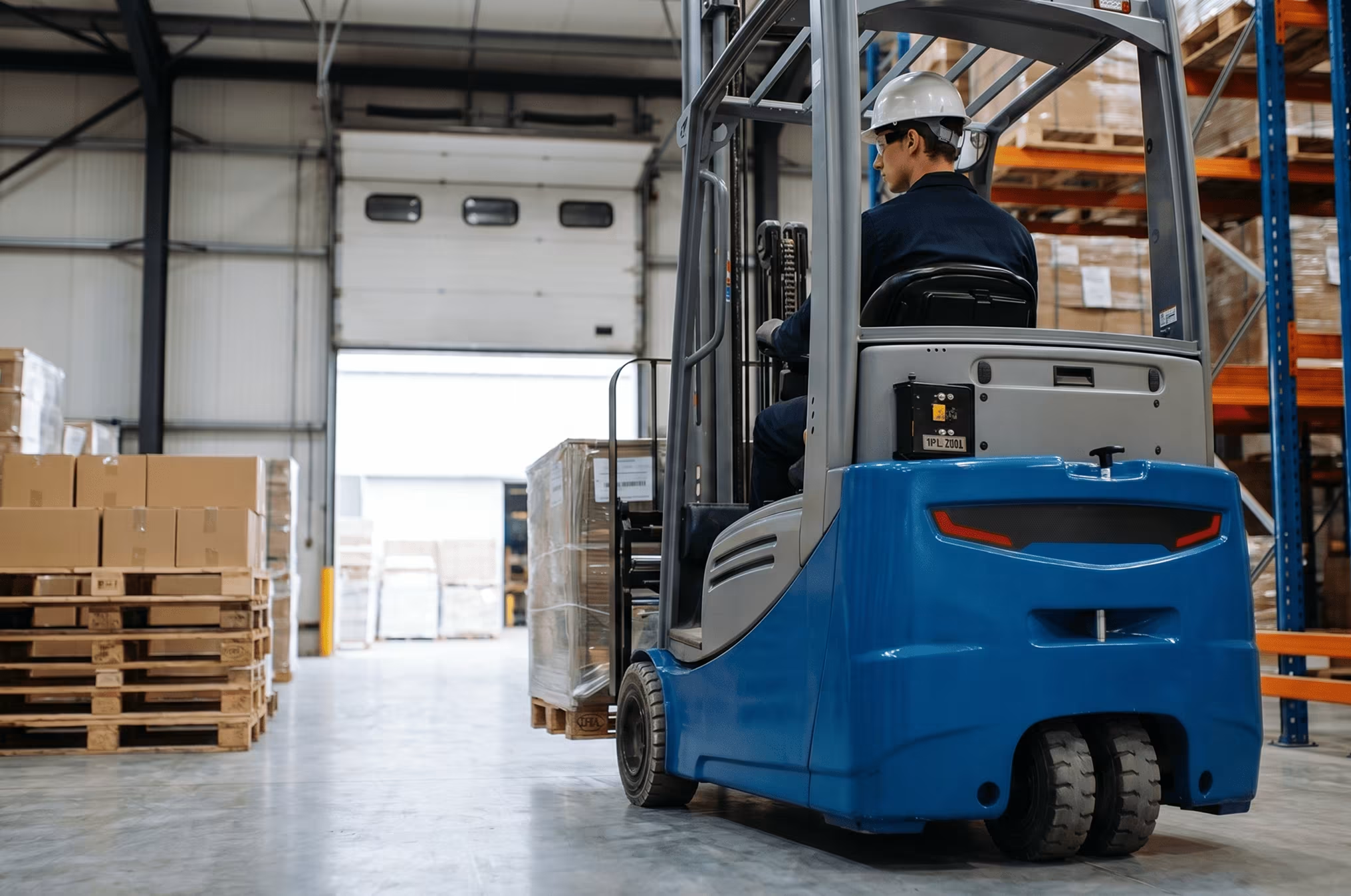
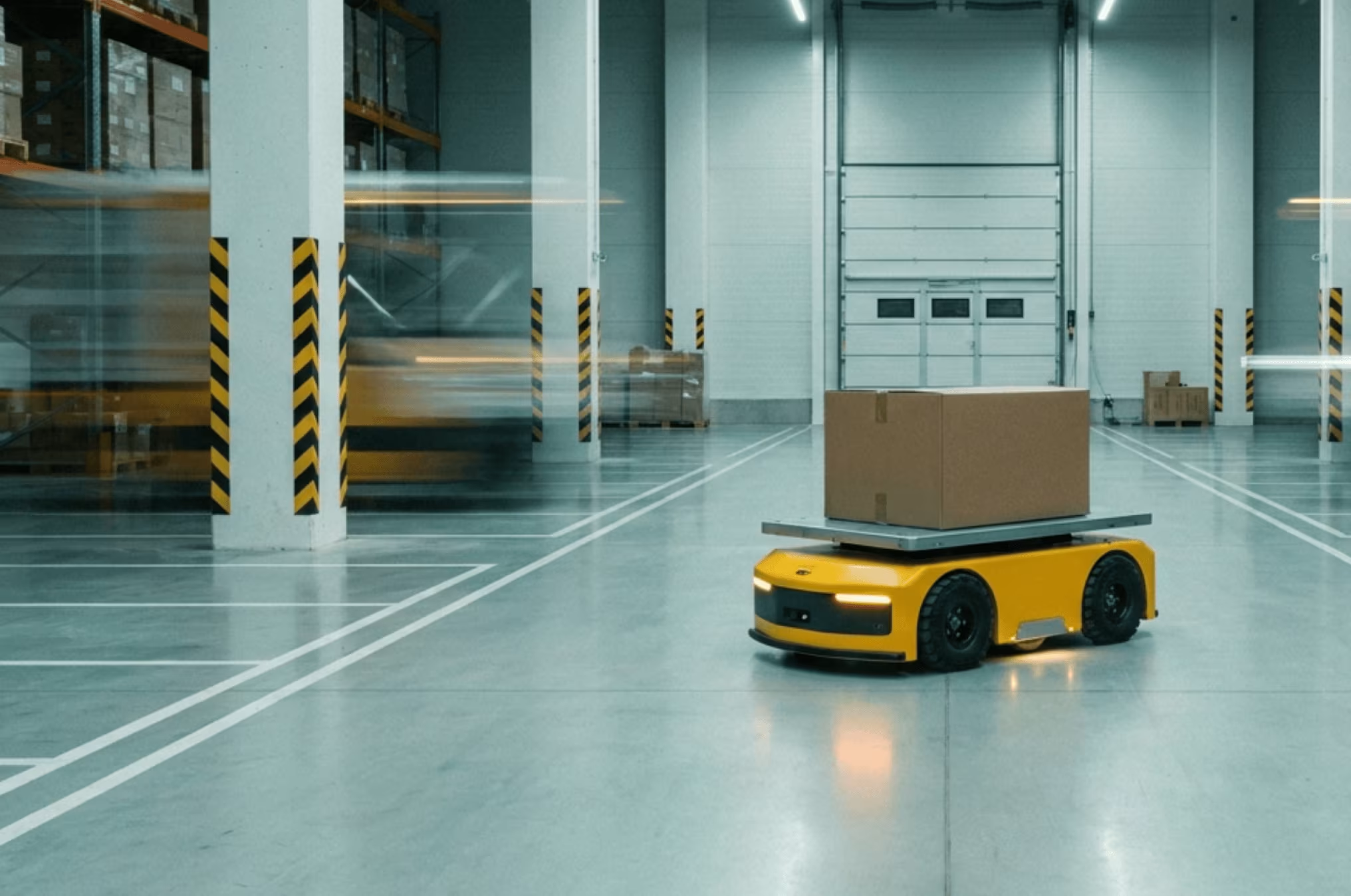
Warehouse teams wanted stronger visibility into personnel and equipment movement inside facilities.
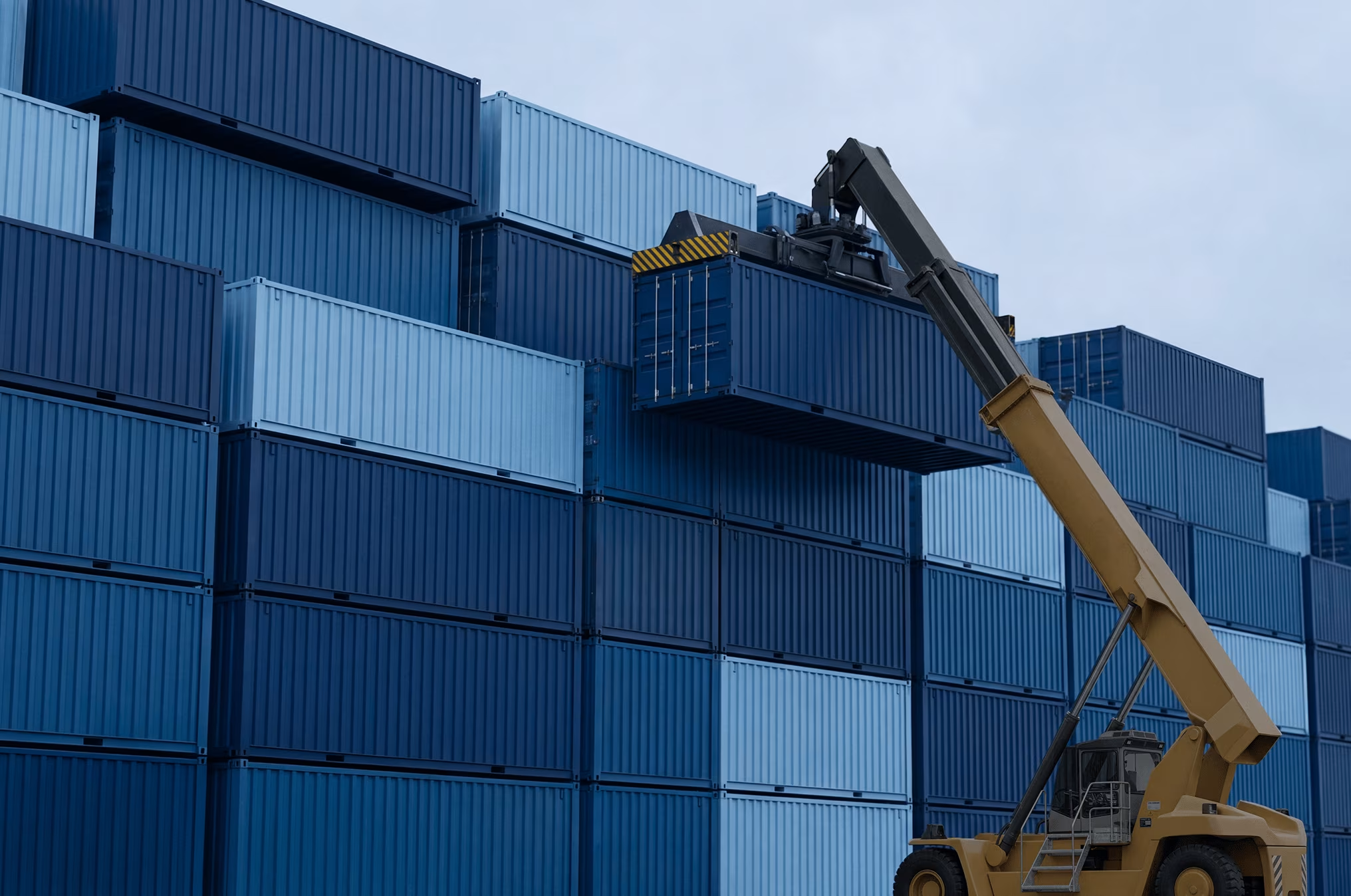
Yard and terminal operators were interested in continuity across covered, congested, and mixed indoor-outdoor environments.
Industrial groups saw potential in connecting movement data with broader operational optimization.
Distribution-oriented partners recognized the value of a positioning layer that can be deployed without new infrastructure.
What stood out was not just curiosity about a new technology category. It was the immediacy of the operational fit. The problem was already familiar to the people we met. They were not asking whether location gaps exist. They were asking how quickly those gaps can be closed without introducing another hardware project.
The Highest-Leverage Conversations Happened Outside the Booth
One of the strongest takeaways from TPM was that the most valuable interactions did not always begin in formal booth conversations. Some of the best meetings came from informal introductions, spontaneous conversations, and quick live demos that started with genuine curiosity and rapidly turned into qualified operational discussions.
That matters because it says something broader about how this category is emerging.
In a market like logistics, new positioning infrastructure is often assumed to be expensive, complex, and slow to evaluate. But when Juxta can be explained quickly and shown live, the conversation shifts fast. Teams immediately begin mapping the system to real workflows: warehouse coordination, cross-dock handoffs, yard movement, container visibility, and personnel awareness in satellite-unfriendly environments.
TPM reinforced that category education is still essential, but once the value is made concrete, interest accelerates.
Why the Maritime and Logistics Market Is Ready
Juxta’s positioning model is especially relevant for logistics because the industry runs through environments where continuity is hard to maintain. Warehouses, covered terminals, staging zones, intermodal yards, and dense industrial sites all create operating conditions where traditional assumptions degrade. Juxta’s Universal Positioning System is designed for exactly those environments, using mapped spaces, synthetic IMU generation, and on-device inference to maintain location awareness without requiring site-wide hardware installation.
TPM conversations made that relevance obvious.
Operators were not looking for another dashboard detached from execution. They were looking for a way to reduce search time, improve handoffs, and create more reliable movement visibility inside the physical environments where logistics work actually happens. That is the strategic implication of infrastructure-free positioning: it turns location from an infrastructure dependency into a deployable operational layer.
What Comes Next
TPM 2026 confirmed that logistics, warehousing, and industrial teams are actively looking for a better positioning model. Not a heavier stack. Not another infrastructure rollout. A better model.
For Juxta, the path forward is clear: continue sharpening the materials that make this category easy to understand, continue supporting demos with richer operational context, and continue turning interest from events like TPM into real deployments across the environments where GPS leaves off.
The next phase of logistics visibility will not be defined by where satellites work best.
It will be defined by whether operations can maintain positioning continuity everywhere else.