
The Small-Asset Shutdown: Why Tool Loss Is Really a Positioning Problem
The most expensive asset you own is rarely the biggest one. It’s the one that makes the job move, and then quietly disappears. A specialty attachment that blocks a crew. A calibrated instrument that halts inspection. A critical kit that turns a two-hour task into a full shift of searching, reassigning, and improvising. Most teams treat these incidents like theft-and-loss. The reality is broader: this is an operations continuity problem. And continuity lives or dies on one primitive capability—reliable positioning across the places work actually happens.
Juxta
Juxta Team
Why small assets trigger big downtime
Small, high-value tools don’t just “go missing.” They create cascading effects:
Crews idle while someone retraces steps. Supervisors re-plan the day around what’s available. Procurement buys duplicates “just in case.” Inventory audits expand, but the result is still guesswork. Over time, the organization accepts blind spots as normal—until a single missing item stalls a project.
That acceptance is the real tax: not the replacement cost, but the accumulated operational drag.
The uncomfortable truth about “tagging everything”
Most asset programs start with optimism: tag critical tools, get visibility, reduce loss. Then reality shows up.
You have to decide what gets instrumented and what doesn’t. You have to mount, register, and govern physical identifiers across teams, sites, and asset lifecycles. You have to maintain coverage discipline, because visibility is never universal; it’s conditional.
Even well-run tagging programs become a second operational layer—valuable, but still a program. And every program has friction: exceptions, gaps, and the slow drift back toward partial visibility.
The continuity problem is environmental
Operations don’t happen in a clean map.
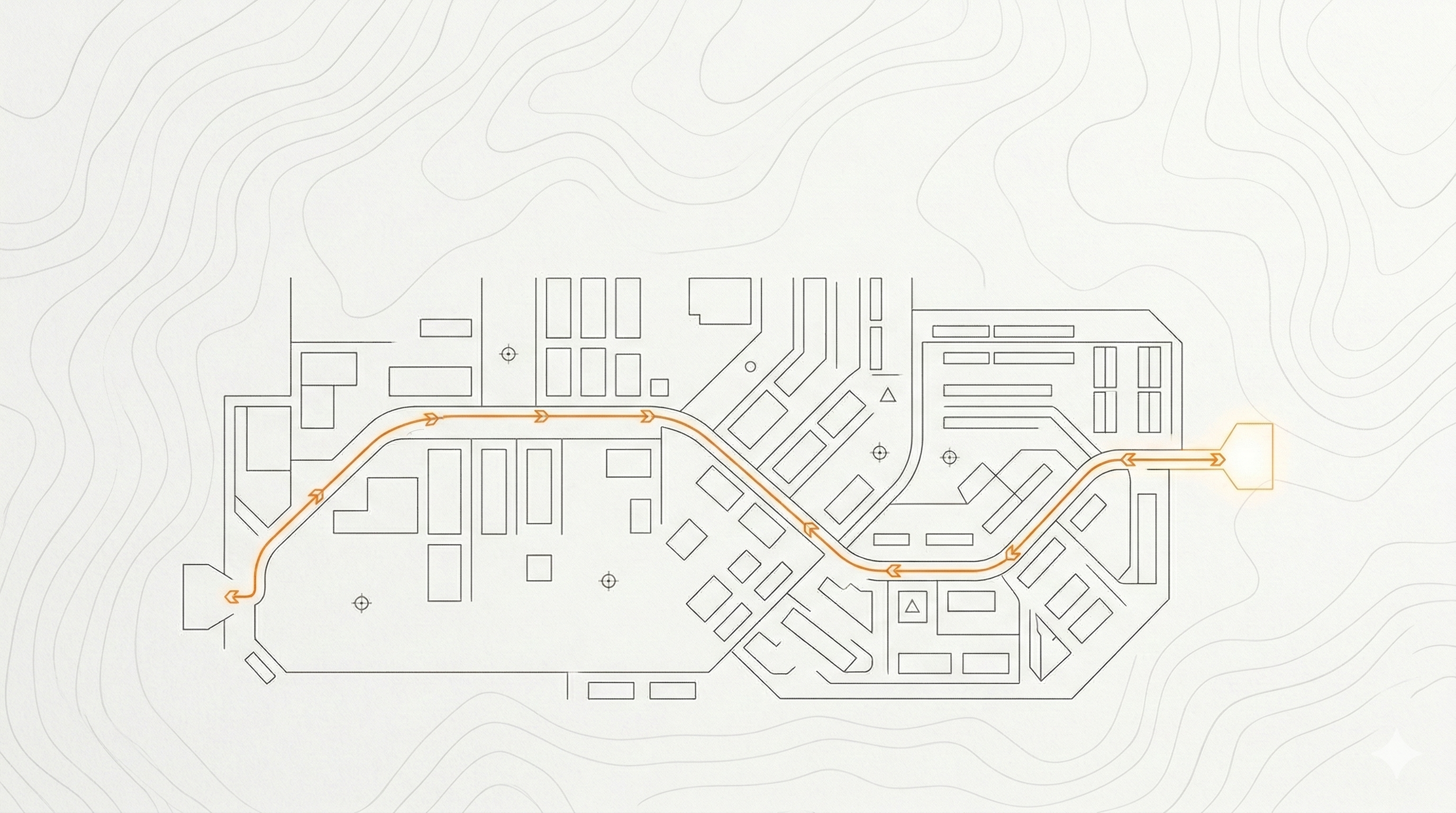
They happen in yards with congestion and metal density. They happen inside buildings with mixed materials and variable layouts. They happen below grade. They happen in places where satellite-dependent assumptions degrade. They happen in the messy seams between indoor and outdoor.
Any system that can’t sustain positioning confidence across those seams forces humans back into search behavior. That’s the moment cost returns—regardless of how good the dashboards look.
Universal Positioning System: the layer that makes tracking real
UPS is the category shift: stop treating tracking as a hardware feature set and start treating positioning as an operational primitive.
A universal positioning layer reduces dependency surface area. It is designed for real conditions, not ideal ones. It prioritizes continuity over perfect moments of precision, because continuity is what prevents shutdown.
When positioning is continuous, “finding” becomes a workflow instead of a scavenger hunt. Recovery becomes fast because the system doesn’t blink when the environment changes. And the organization stops paying the invisible tax of uncertainty.
What to demand from any solution
If you want to prevent the small-asset shutdown, evaluate systems on three criteria:
First, coverage reality, not coverage claims. Where does it hold up—yards, interiors, basements, underground, mixed sites—and where does it degrade?
Second, position confidence, not just “last seen.” When you need the asset now, do you get a reliable location narrative or a stale breadcrumb?
Third, time-to-recovery, measured in minutes of crew time, not in features. The operational win is not a better map; it’s fewer people searching.
The executive metric: avoided downtime
The most meaningful ROI metric isn’t “assets recovered.” It’s downtime avoided.
If you can reduce search time, eliminate duplicate purchases driven by uncertainty, and keep crews executing to plan, you’ve turned a chronic leak into compounding operational advantage.
That’s the difference between tracking as a tool—and positioning as infrastructure.