Hospitals depend on thousands of mobile medical devices every day.
Infusion pumps move between patient rooms. Wheelchairs are shared across departments. Portable ultrasound machines travel from floor to floor. Bladder scanners, ECG machines, patient monitors, specialty beds, and crash carts are constantly being relocated to meet changing clinical demands.
These assets are critical to patient care, yet many hospitals still struggle to answer a simple question:
Where is the equipment right now?
When equipment cannot be located quickly, clinicians spend valuable time searching, procedures are delayed, and hospitals often purchase additional equipment simply to ensure enough is available.
Juxta's NODE1 asset tag provides continuous, real-time visibility into mobile medical equipment, helping healthcare organizations locate assets instantly, improve utilization, and make better operational decisions.
The Challenge Isn't Always Equipment Shortages
When a nurse cannot find an infusion pump or transport staff spend several minutes searching for a wheelchair, the immediate assumption is often that there isn't enough equipment.
In reality, hospitals frequently own sufficient inventory—it simply isn't where staff expect it to be.
Equipment may be sitting in another department, waiting outside a patient room, stored in a hallway, or left in a temporary staging area after discharge.
Without continuous visibility, hospitals often respond by purchasing additional equipment, increasing capital expenditures without addressing the underlying operational issue.
Real-time asset tracking helps organizations understand whether they truly need more equipment or simply better visibility into the equipment they already own.
Designed for Mobile Medical Equipment
NODE1 is a compact, rechargeable asset tag that attaches directly to equipment already moving throughout a healthcare facility.
Common applications include:
- Infusion pumps
- Wheelchairs
- Portable patient monitors
- Bladder scanners
- Portable ultrasound systems
- ECG machines
- Crash carts
- Specialty beds
- Ventilators
- IV poles
- Mobile workstations
- Biomedical testing equipment
Because the tag remains attached to the equipment, location information is always associated with the asset itself rather than relying on manual check-in or check-out procedures.
Reducing Time Spent Searching
Clinicians should spend their time caring for patients—not looking for equipment.
Yet equipment searches remain a common source of frustration in hospitals.
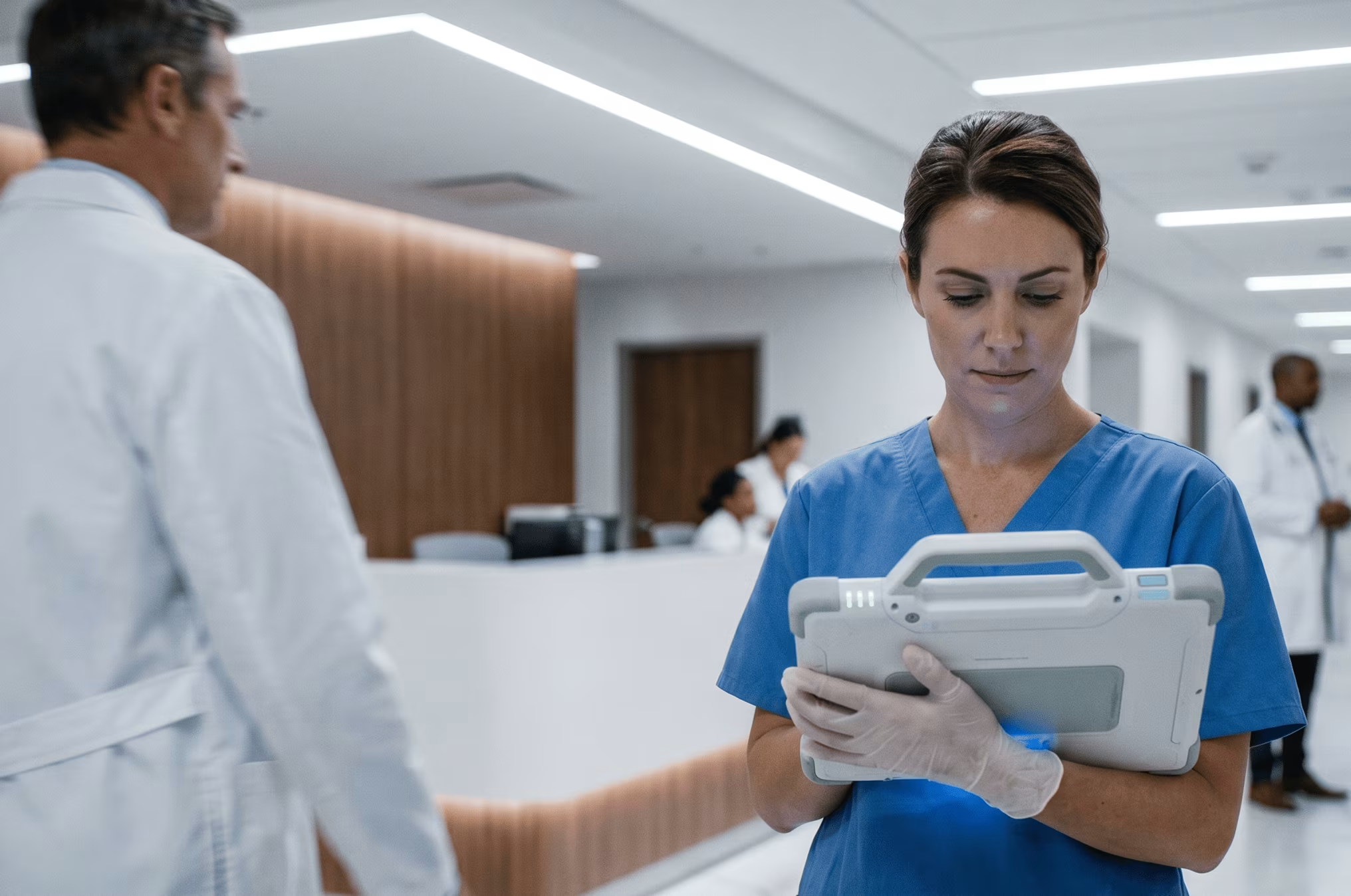
A nurse preparing medication may need to locate an available infusion pump.
An emergency department may require an additional monitor immediately.
Transport staff may spend valuable time searching multiple floors for a wheelchair during peak patient volume.
Even if each search only takes a few minutes, those interruptions accumulate across hundreds of clinicians and thousands of patient encounters.
With NODE1, staff can quickly identify the location of available equipment and retrieve the closest appropriate asset, reducing unnecessary walking and helping clinical workflows move more efficiently.
Improving Equipment Utilization
One of the greatest benefits of continuous asset tracking is understanding how equipment is actually being used.
Hospitals often have limited visibility into utilization beyond periodic inventories or maintenance records.
NODE1 provides continuous operational data that helps answer questions such as:
- Which equipment is used most frequently?
- Which assets remain idle for extended periods?
- Which departments consistently experience the highest demand?
- How often is equipment moved between units?
- Where does equipment typically accumulate?
- Are additional purchases actually necessary?
These insights help healthcare organizations make more informed purchasing decisions while improving the utilization of existing assets.
Supporting Biomedical Engineering
Biomedical engineering teams are responsible for maintaining thousands of medical devices across large healthcare facilities.
Routine inspections, preventive maintenance, repairs, and equipment recalls all depend on being able to locate devices quickly.
When equipment locations are uncertain, maintenance activities become significantly more time-consuming.
With NODE1, biomedical engineering teams can immediately identify the location of equipment requiring inspection or service, reducing time spent searching while improving maintenance efficiency.
Historical movement data can also help teams better understand how equipment is distributed throughout the facility over time.
Helping Reduce Equipment Loss
Medical equipment is constantly moving.
Devices are transferred between departments, temporarily relocated during patient surges, sent for cleaning, or staged outside patient rooms before their next use.
Occasionally, equipment is misplaced entirely.
While hospitals rarely lose equipment because of theft, devices frequently become difficult to locate simply because there is no reliable record of where they were last used.
Real-time tracking helps reduce these situations by providing continuous visibility into equipment movement throughout the hospital.
When an asset cannot be found immediately, staff can locate it in seconds instead of searching multiple departments.
Supporting Patient Flow
Equipment availability directly affects patient flow.
If an infusion pump cannot be located, treatment may be delayed.
If transport staff cannot quickly find a wheelchair, discharge takes longer.
If portable imaging equipment is unavailable, diagnostic workflows slow down.
Improving equipment visibility reduces these small operational delays that collectively influence admissions, transfers, procedures, and discharge throughout the hospital.
By ensuring critical equipment is easier to locate, hospitals can improve operational efficiency without changing clinical workflows.
Integrating With Existing Healthcare Systems
NODE1 is designed to work alongside the systems hospitals already use.
Location data can be integrated into asset management platforms, computerized maintenance management systems (CMMS), hospital operations dashboards, enterprise resource planning (ERP) systems, and custom healthcare applications.
Rather than replacing existing workflows, NODE1 adds a continuous layer of location intelligence that gives operational teams greater visibility into the movement and availability of equipment across the organization.
Built for Healthcare Environments
Medical equipment experiences constant movement throughout the day.
Devices are transported between patient rooms, operating suites, emergency departments, imaging centers, and outpatient clinics while undergoing regular cleaning and maintenance.
NODE1 was designed for these demanding environments.
Its compact, rechargeable form factor allows it to be securely attached to a wide range of medical equipment without interfering with clinical use, providing continuous visibility as assets move throughout the facility.
Whether deployed in a community hospital, academic medical center, outpatient network, or integrated health system, NODE1 helps organizations maintain a clearer picture of where critical equipment is and how it is being used.
Better Visibility Leads to Better Resource Allocation
Hospitals have spent decades improving the way they manage clinical information. Managing physical resources with the same level of visibility is the next step.
By attaching NODE1 asset tags to mobile medical equipment, healthcare organizations gain continuous insight into asset location, utilization, and movement across their facilities.
That visibility helps reduce time spent searching for equipment, improves utilization, supports maintenance operations, and enables more informed capital planning.
Ultimately, the goal is simple: ensure that the right equipment is available in the right place at the right time so clinicians can spend less time looking for devices and more time caring for patients.