Every warehouse has valuable assets that spend their day in motion.
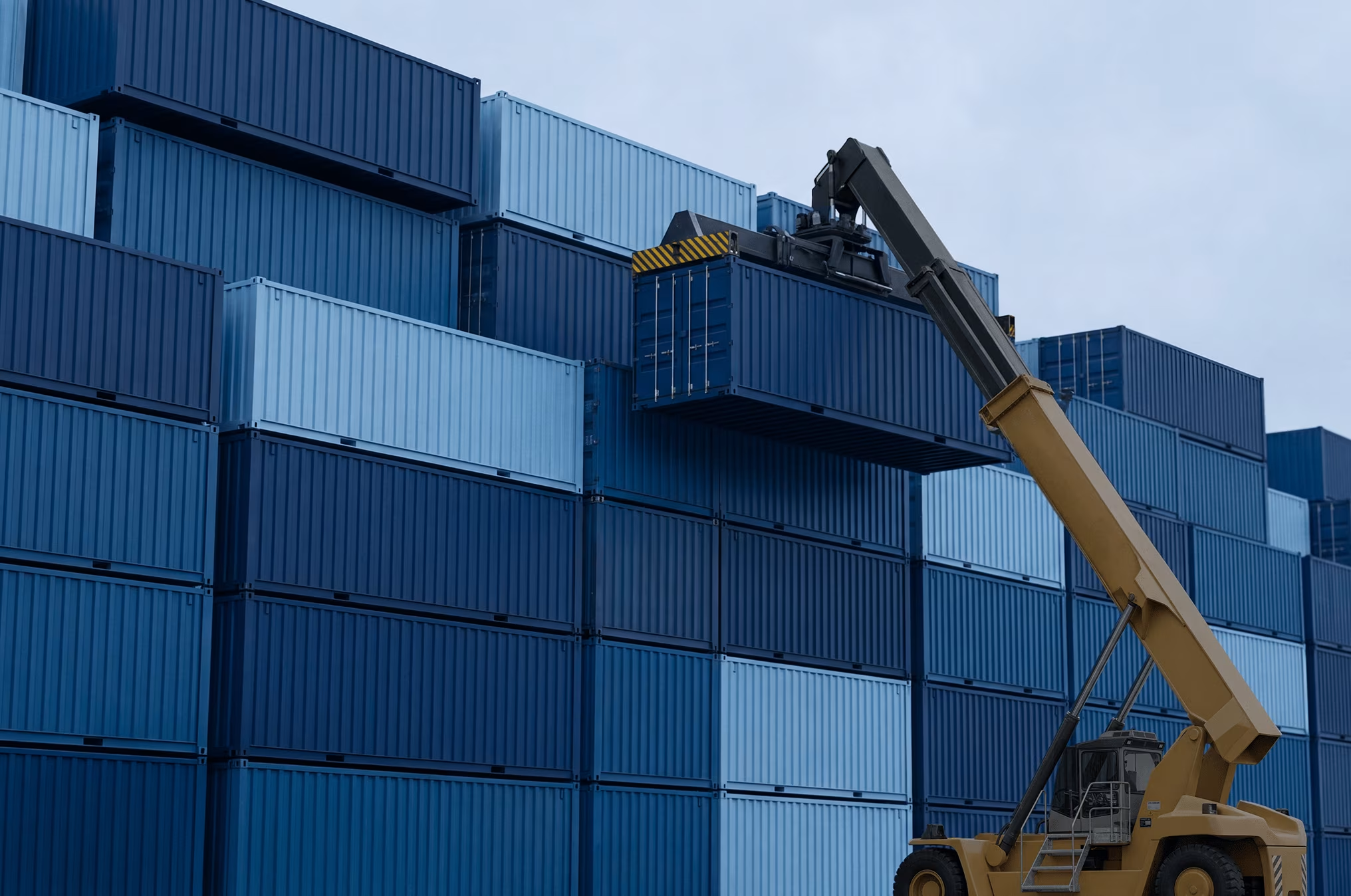
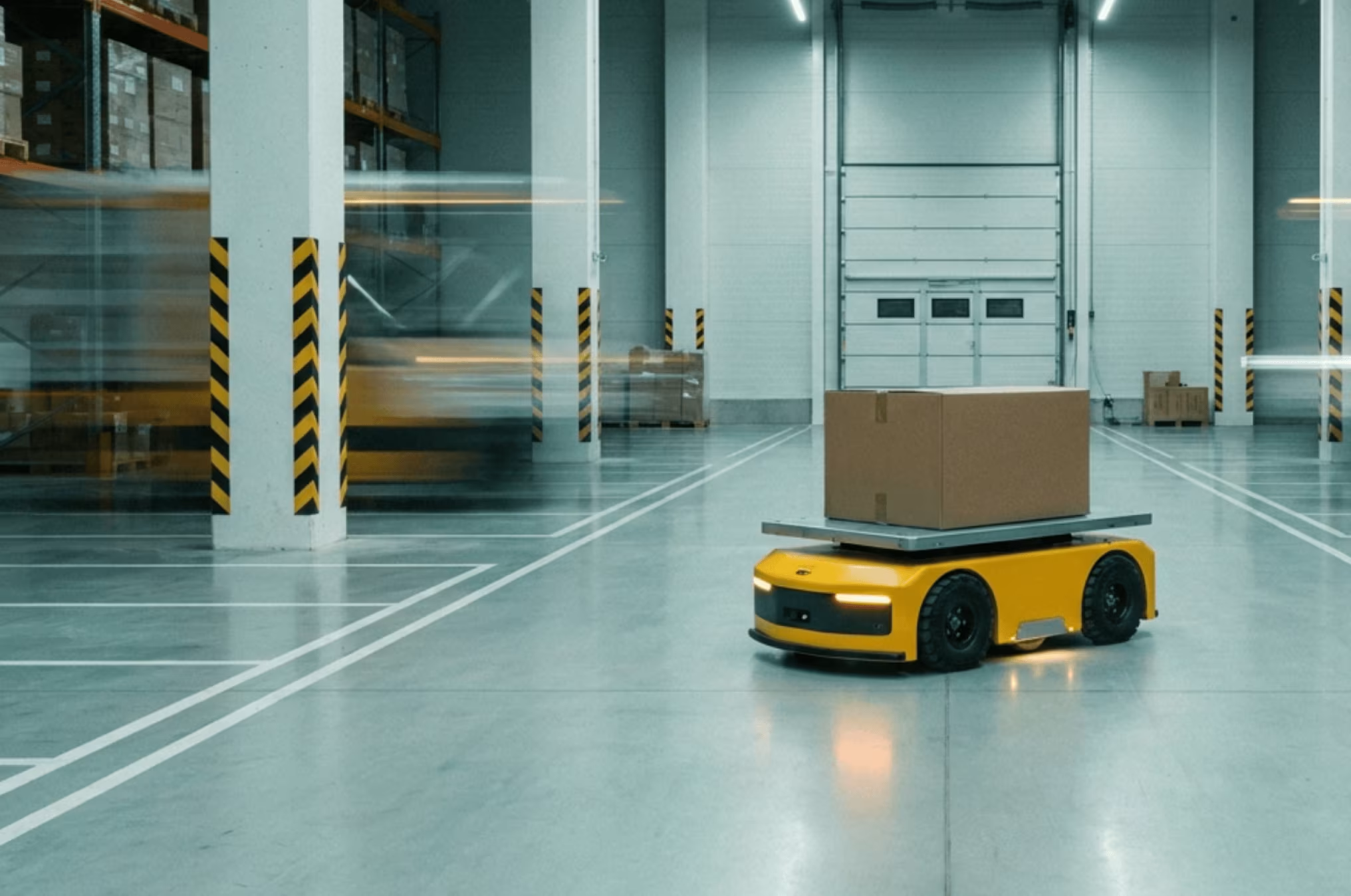
Reusable shipping containers move between facilities. High-value inventory waits in staging areas before shipment. Mobile carts circulate between picking zones. Returnable totes travel through distribution networks. Specialized equipment is shared across departments, often with no clear record of where it was last used.
Most of these assets are critical to daily operations, yet many warehouses still rely on barcode scans, manual inventories, or periodic audits to determine where they are.
Those methods work well when an asset is stationary. They become much less effective once that asset begins moving.
Juxta's NODE1 asset tag was built to provide continuous visibility into warehouse assets, giving operators a live view of where equipment and inventory are throughout the facility—and well beyond it.
Built for Assets That Don't Have Their Own Connectivity
Unlike forklifts or handheld scanners, most warehouse assets don't contain onboard electronics.
Shipping crates, pallets, roll cages, reusable containers, inventory carts, and specialty equipment are constantly moving but have no way to communicate their location.
NODE1 solves that problem.
The rechargeable device can be attached directly to virtually any asset, transforming it into a connected device capable of reporting its location continuously. Because NODE1 is compact, rugged, and designed for industrial environments, it can remain attached throughout normal warehouse operations without disrupting existing workflows.
Whether an asset is sitting in receiving, moving through a distribution center, or traveling between customer sites, NODE1 keeps it visible.
Reducing Time Spent Searching
Nearly every warehouse experiences the same problem.
A shipment is ready to leave, but the correct container can't be found.
An employee spends ten minutes looking for a rolling cart.
A supervisor walks multiple aisles searching for a returnable crate that was last seen earlier that morning.
Individually, these delays seem minor.
Across hundreds of employees and thousands of shifts, they become a significant operational cost.
With NODE1, warehouse teams can locate assets in real time rather than relying on memory or manual searches.
Instead of asking "Has anyone seen this container?", staff can immediately identify its location and continue working.
Improving Inventory Visibility
Inventory accuracy depends on knowing more than just what is in stock.
It also depends on knowing where inventory is.
While Warehouse Management Systems are highly effective at tracking inventory through scheduled scans, they often provide visibility only at specific points in the workflow. Between scans, inventory may move through staging areas, loading docks, inspection stations, or temporary storage locations with limited real-time visibility.
By attaching NODE1 to reusable containers, mobile inventory racks, or high-value shipments, organizations gain continuous awareness of inventory movement throughout the warehouse.
Managers can quickly answer questions such as:
- Which staging area contains today's outbound shipments?
- Where are high-value customer orders currently located?
- Which containers are still waiting for pickup?
- Has inventory been moved to the wrong loading dock?
- Which shipments have remained idle longer than expected?
Continuous visibility helps reduce misplaced inventory while improving confidence in daily operations.
Managing Returnable Containers
Returnable assets often represent a significant investment.
Plastic totes, metal cages, reusable pallets, insulated shipping containers, and specialized transport equipment frequently move between suppliers, distribution centers, manufacturing facilities, and customers.
Without reliable visibility, organizations often experience unnecessary losses and purchase additional containers simply because existing ones cannot be located.
NODE1 provides continuous tracking throughout the asset's lifecycle, helping organizations understand:
- Current location
- Movement history
- Time spent at customer sites
- Utilization rates
- Turnaround time
- Idle inventory
- Distribution across facilities
Rather than replacing missing assets, companies can better utilize the ones they already own.
Supporting High-Value Inventory
Not every shipment requires continuous tracking.
For products with high value, strict chain-of-custody requirements, or critical delivery schedules, however, knowing their location at all times can significantly reduce operational risk.
NODE1 can be attached directly to shipping containers, equipment cases, demonstration units, specialized tools, or other valuable inventory that moves throughout warehouses and distribution networks.
Instead of depending solely on periodic barcode scans, organizations maintain visibility throughout the asset's journey.
Warehouse Visibility Beyond the Four Walls
Many warehouse tracking systems stop working once an asset leaves the building.
NODE1 was designed for operations that extend beyond a single facility.
Assets often travel between warehouses, suppliers, manufacturing plants, customer locations, construction sites, hospitals, or service centers before returning to inventory.
Maintaining visibility throughout that journey helps organizations better understand inventory movement across their entire logistics network rather than only within one warehouse.
For organizations managing reusable containers or shared equipment, this broader visibility can substantially improve asset utilization while reducing unnecessary replacement purchases.
Built for Enterprise Integration
NODE1 is more than a standalone tracking device.
Location data can be integrated into existing enterprise software, including Warehouse Management Systems (WMS), Enterprise Resource Planning (ERP) platforms, transportation management systems, inventory management software, and custom operational dashboards.
This allows organizations to combine inventory data with live asset locations, creating a more complete operational picture without changing existing warehouse workflows.
Rather than replacing current systems, NODE1 adds another layer of operational intelligence.
Designed for Industrial Environments
Warehouse assets experience demanding operating conditions.
They are loaded onto trucks, stacked in storage racks, exposed to dust and vibration, and moved continuously throughout the day.
NODE1 was designed with these environments in mind.
Its compact, rechargeable design allows it to be attached securely to a wide range of assets, while its durable construction supports long-term deployment across warehouses, manufacturing facilities, logistics operations, and distribution centers.
Whether tracking a reusable crate or a fleet of mobile inventory carts, the hardware is built for continuous industrial use.
Visibility That Scales With Your Operation
As supply chains become more dynamic, knowing where inventory was last scanned is no longer enough.
Warehouse operators increasingly need continuous visibility into the movement of reusable assets, high-value inventory, and mobile equipment across their operations.
Juxta's NODE1 asset tag provides that visibility without requiring organizations to redesign their workflows or deploy complex infrastructure.
By transforming ordinary crates, containers, carts, and inventory into connected assets, NODE1 helps reduce search time, improve inventory accuracy, increase asset utilization, and provide a clearer understanding of how materials move throughout the supply chain.
For warehouses focused on improving operational efficiency, real-time asset visibility isn't just a convenience—it's becoming a fundamental part of modern inventory management.