Modern military operations rely on an increasing number of connected devices. Smartphones, rugged tactical handhelds, tablets, wearable computers, unmanned systems, and vehicle-mounted mission computers have become essential tools for command and control, mission planning, communications, and situational awareness.
Nearly all of these systems contain inertial measurement units (IMUs)—accelerometers and gyroscopes that continuously measure motion. Despite being present in almost every modern military device, these sensors are rarely used to their full potential.
Juxta's Software Development Kit (SDK) transforms existing IMU-equipped devices into a resilient positioning capability, allowing defense organizations to maintain continuous location awareness in environments where GPS is degraded, denied, or unavailable.
Rather than introducing new tracking hardware, the platform extends the capabilities of equipment forces already carry and operate every day.
Preparing for Operations Beyond GPS
GPS remains one of the most important technologies in modern defense. However, military planners increasingly recognize that satellite navigation cannot always be assumed to be available.
Electronic warfare, signal jamming, spoofing, dense urban terrain, underground infrastructure, ships, aircraft hangars, and large concrete structures all present situations where GPS performance may be limited or unavailable.
As defense organizations invest in more resilient command-and-control capabilities, positioning has become an important layer of operational redundancy rather than a capability that depends entirely on satellites.
Juxta's SDK provides that additional layer by enabling continuous positioning directly on existing devices without requiring external positioning infrastructure.
Leveraging Existing Military Hardware
Across today's defense organizations, personnel already carry or operate a wide range of connected devices, including:
- Rugged tactical smartphones
- Android Tactical Assault Kit (ATAK) devices
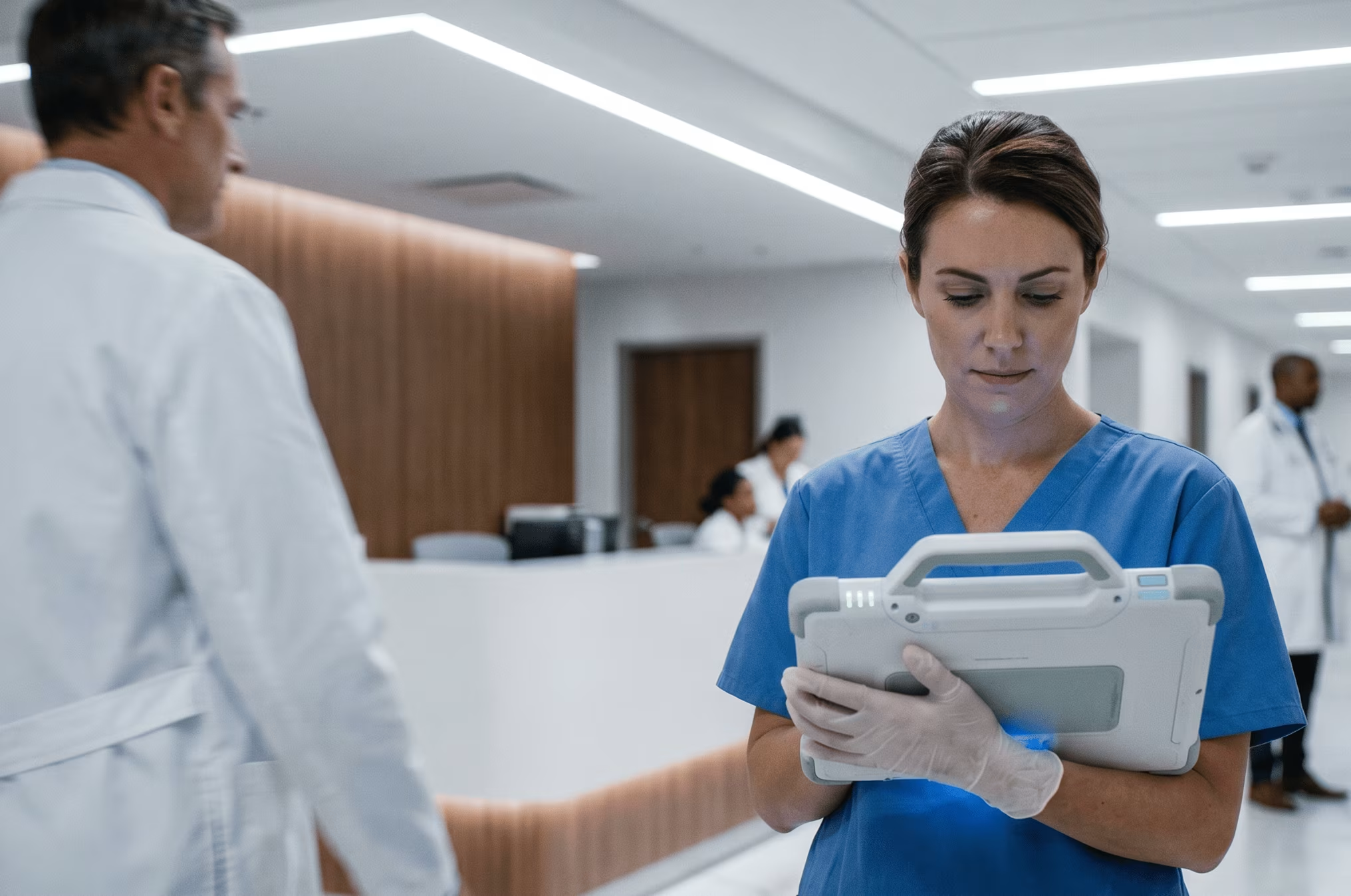
- Mission tablets
- Vehicle-mounted tablets
- Dismounted soldier systems
- Tactical handheld computers
- Unmanned ground vehicle controllers
- Robotic mission computers
- Custom embedded platforms
Because these systems already contain IMUs, they provide an ideal foundation for software-defined positioning.
Rather than deploying dedicated tracking hardware, organizations can integrate Juxta's SDK directly into existing applications and operational software, allowing positioning to become another capability within the devices already fielded.
Supporting Dismounted Operations
Once personnel move indoors, underground, or into dense urban environments, maintaining accurate positional awareness becomes significantly more challenging.
Military units conducting room clearing, infrastructure inspections, tunnel operations, shipboard activities, or urban reconnaissance often operate in environments where GPS is unreliable or unavailable.
By integrating positioning directly into devices already carried by personnel, commanders gain a better understanding of friendly force movement throughout complex environments.
The objective is not simply to display locations on a map. It is to improve situational awareness during operations where maintaining an accurate understanding of force disposition is inherently difficult.
Enhancing Existing Command and Control Applications
Most modern military organizations have already invested heavily in digital command-and-control platforms.
Applications such as ATAK and other tactical software provide mission planning, force tracking, communications, and operational coordination.
Juxta is designed to complement these existing systems by adding resilient positioning capabilities through software integration.
Rather than replacing operational software, the SDK provides location data that can be incorporated into existing mission displays, digital maps, and operational dashboards.
This allows commanders to maintain continuity within familiar workflows while extending positioning into environments where satellite navigation alone is insufficient.
Improving Installation and Base Operations
Not every defense mission occurs in a contested environment.
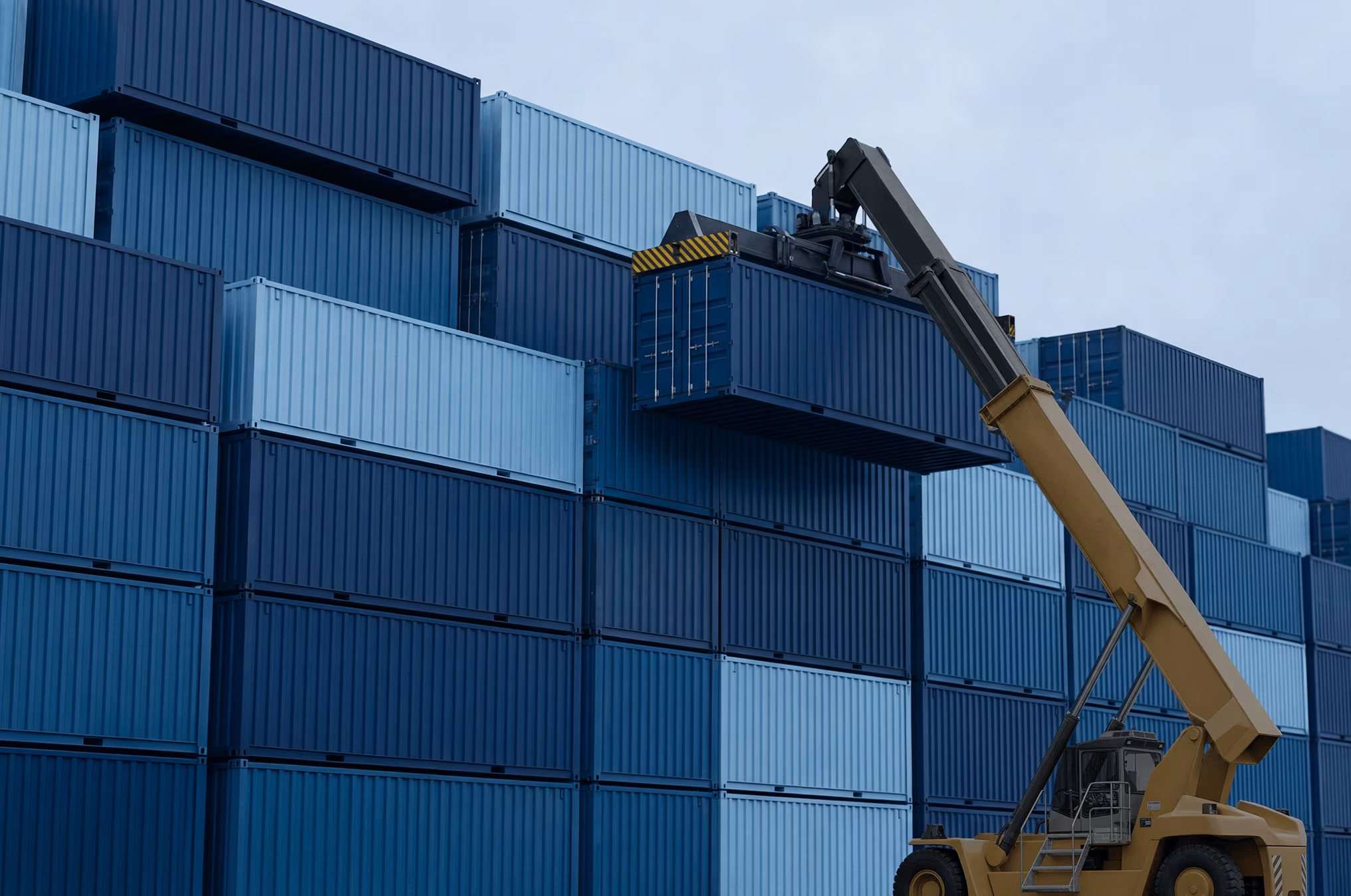
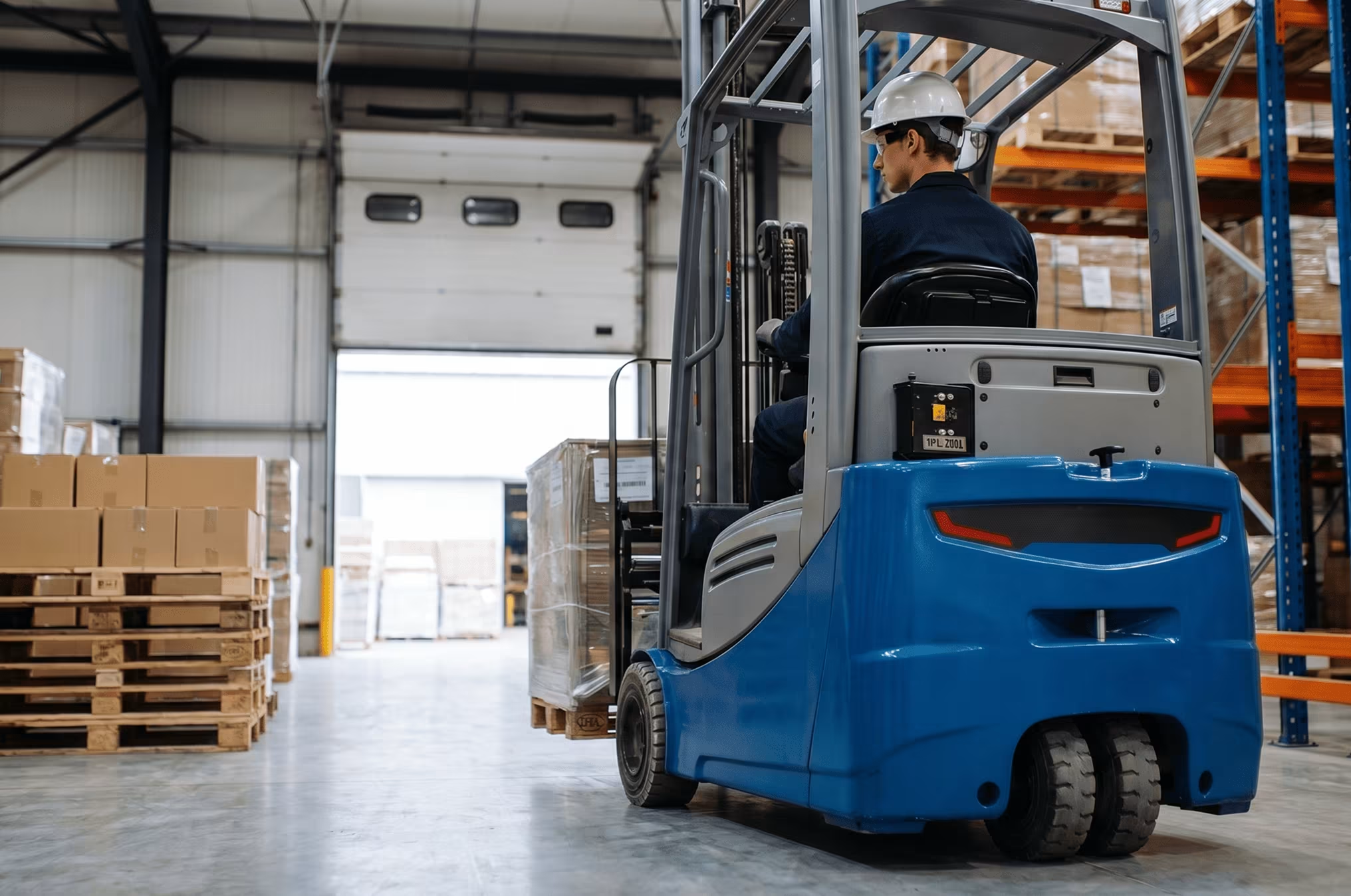
Military installations manage thousands of personnel moving between headquarters buildings, maintenance facilities, warehouses, medical centers, training areas, and flight lines every day.
Many of these personnel already carry government-issued mobile devices for work orders, communications, inspections, and administrative tasks.
By integrating positioning into those existing devices, installations can gain greater visibility into operational workflows without issuing additional hardware.
Potential applications include:
- Maintenance team coordination
- Airfield operations
- Shipyard activities
- Security patrol management
- Engineering inspections
- Emergency response coordination
- Facilities management
- Training exercises
These capabilities improve operational efficiency while leveraging technology already deployed across the installation.
Supporting Human-Machine Teams
Defense organizations are increasingly integrating autonomous systems into operational environments.
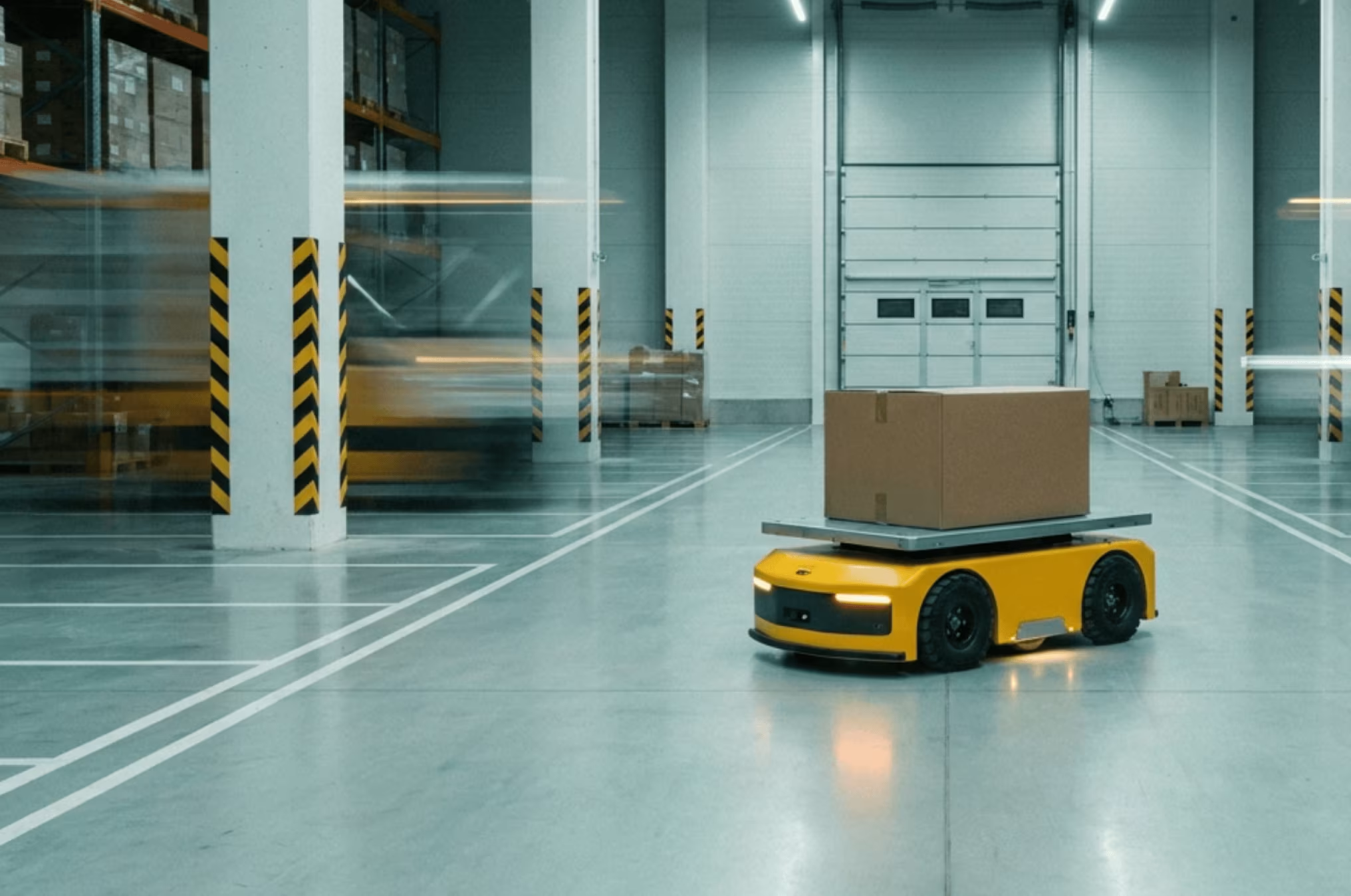
Ground robots, unmanned aerial systems, autonomous logistics platforms, and remote inspection vehicles all generate valuable operational data. However, these systems often operate independently from the personnel supporting them.
By integrating Juxta into robotic platforms and operator devices alike, organizations can build a more unified picture of human and autonomous movement during missions.
Understanding how operators, vehicles, and robotic systems interact can improve coordination, reduce operational uncertainty, and support more informed decision-making.
Strengthening Training and Readiness
Training environments provide an opportunity to learn from movement before operational deployments.
Using software integrated into existing training devices, organizations can review movement patterns after exercises to better understand how units navigated complex terrain, cleared structures, coordinated between teams, or responded to changing mission conditions.
Rather than relying solely on observer notes or video review, commanders can incorporate objective movement data into after-action reviews.
Over time, these data help identify recurring operational patterns and evaluate how tactics evolve across repeated training events.
Integrating Into Existing Defense Software
Juxta is designed as a software capability that integrates into existing defense systems rather than operating as a standalone application.
The SDK can be incorporated into:
- Tactical command-and-control platforms
- Mission planning software
- ATAK-based applications
- Robotics control systems
- Training platforms
- Digital mission rehearsal tools
- Logistics applications
- Custom defense software
This approach allows defense organizations to add resilient positioning without replacing established operational workflows or requiring personnel to adopt new hardware platforms.
Designed for Diverse Operational Environments
Military operations rarely occur in a single type of environment.
Personnel move between open terrain, urban infrastructure, maintenance facilities, air bases, underground spaces, ships, warehouses, command centers, and temporary operating locations throughout a mission.
Because Juxta operates entirely through software running on existing IMU-equipped devices, the same positioning capability can support operations across these diverse environments without requiring dedicated infrastructure or environment-specific installations.
This flexibility makes the platform suitable for both operational deployments and day-to-day installation activities.
Building More Resilient Situational Awareness
The future of defense technology is increasingly software-defined.
Military organizations have already invested heavily in connected devices that support communications, planning, and mission execution. The opportunity now is to extend those same devices with resilient positioning capabilities that continue operating when GPS alone cannot provide the full picture.
By integrating directly into smartphones, tactical handhelds, tablets, robotics platforms, and other IMU-equipped systems, Juxta enables continuous positioning without introducing additional hardware into the field.
The result is more than an alternative navigation capability. It is an additional layer of operational awareness that helps commanders better understand personnel movement, improve coordination, strengthen command and control, and make more informed decisions using the technology forces already deploy every day.