For many warehouse operators, the next challenge isn't deploying more hardware—it's getting more value from the hardware they already have.
Modern warehouses already rely on a growing ecosystem of connected devices. Associates carry rugged handheld computers and smartphones. Forklifts are equipped with onboard tablets and telematics systems. Autonomous Mobile Robots (AMRs) navigate facilities using onboard sensors. Wearable scanners and industrial devices continuously collect data throughout the workday.
Despite this, most of these devices operate independently. A warehouse may know where inventory is stored and where a forklift was last reported through GPS outdoors, but once operations move inside the building, there is often no unified view of how people, vehicles, and robots move through the facility.
Juxta's software platform is designed to bridge that gap.
Rather than requiring new tracking hardware or facility-wide infrastructure, Juxta can be integrated directly into existing devices through a lightweight Software Development Kit (SDK), enabling continuous positioning anywhere those devices already operate.
Building on Existing Hardware Investments
Warehouses have invested millions of dollars in mobile technology over the past decade.
Many operations already deploy:
- Rugged Android handheld computers
- Enterprise smartphones
- Forklift-mounted tablets
- Autonomous Mobile Robots (AMRs)
- Automated Guided Vehicles (AGVs)
- Wearable barcode scanners
- Industrial tablets
- Custom robotics platforms
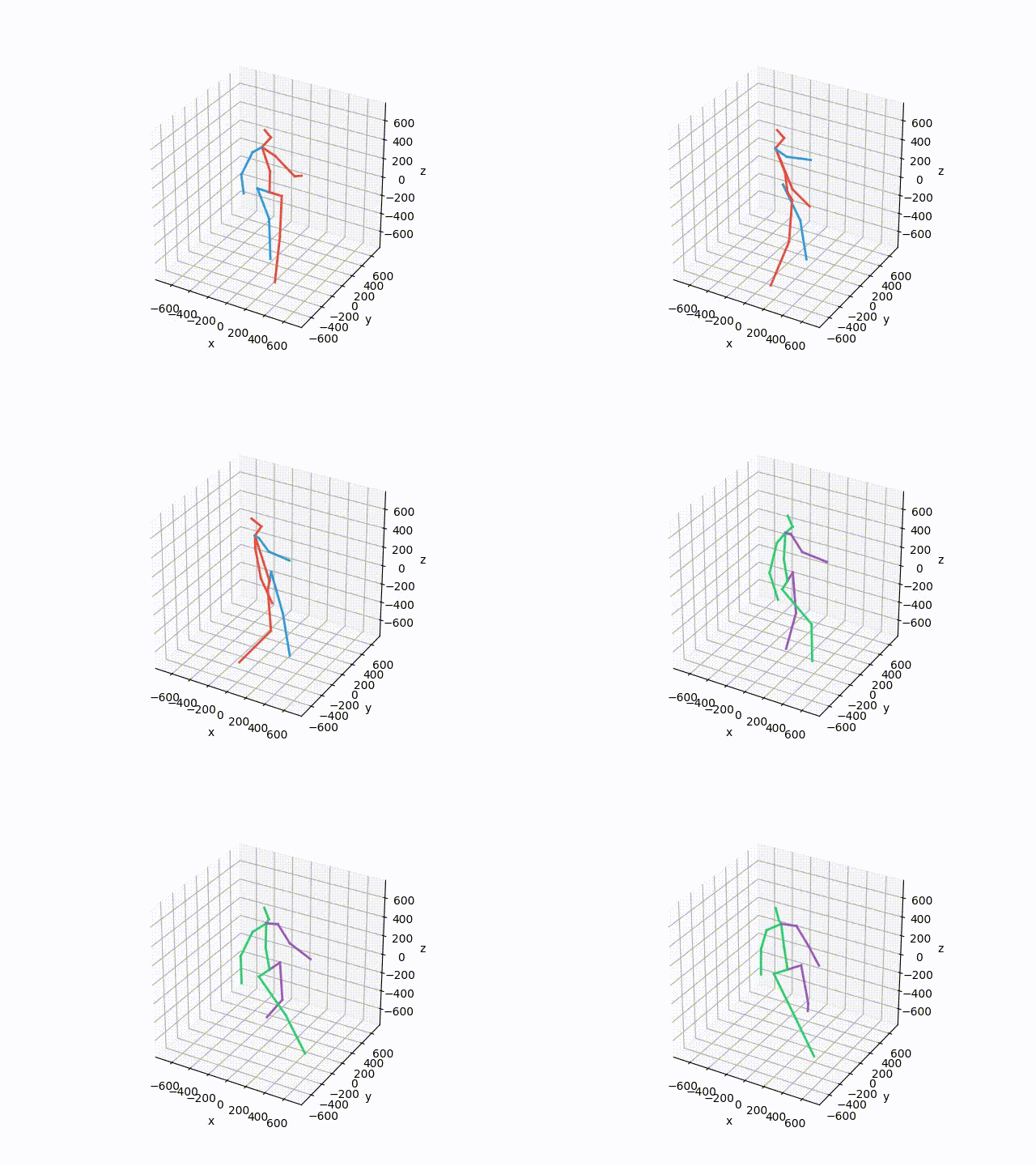
Nearly all of these devices contain inertial measurement units (IMUs), including accelerometers and gyroscopes that continuously measure motion.
Historically, those sensors have been used for relatively simple functions such as screen orientation or motion detection. Juxta's SDK transforms them into a positioning system capable of providing continuous location information in environments where GPS is unavailable.
Instead of purchasing new tracking hardware, organizations can extend the capabilities of devices they already own.
A Software-First Approach
Traditional indoor positioning systems typically require infrastructure to be installed throughout a warehouse—Bluetooth beacons, Ultra-Wideband anchors, cameras, or other dedicated hardware.
While these systems can provide accurate positioning, they also introduce installation costs, maintenance requirements, and additional complexity whenever facilities expand or layouts change.
Juxta's SDK takes a fundamentally different approach.
By combining IMU data with proprietary sensor fusion and machine learning algorithms, the platform enables positioning directly on existing devices without requiring pre-installed infrastructure throughout the building.
For software teams, integration is straightforward. The SDK can be embedded into existing warehouse applications, robotics software, or enterprise mobility platforms, allowing positioning to become another service within the organization's software ecosystem rather than another standalone system.
Bringing Every Moving Device Into One Operational View
Most warehouse operations involve multiple classes of mobile devices operating simultaneously.
Forklift operators use vehicle-mounted tablets.
Order pickers carry rugged handheld computers.
Supervisors use smartphones.
AMRs navigate warehouse aisles.
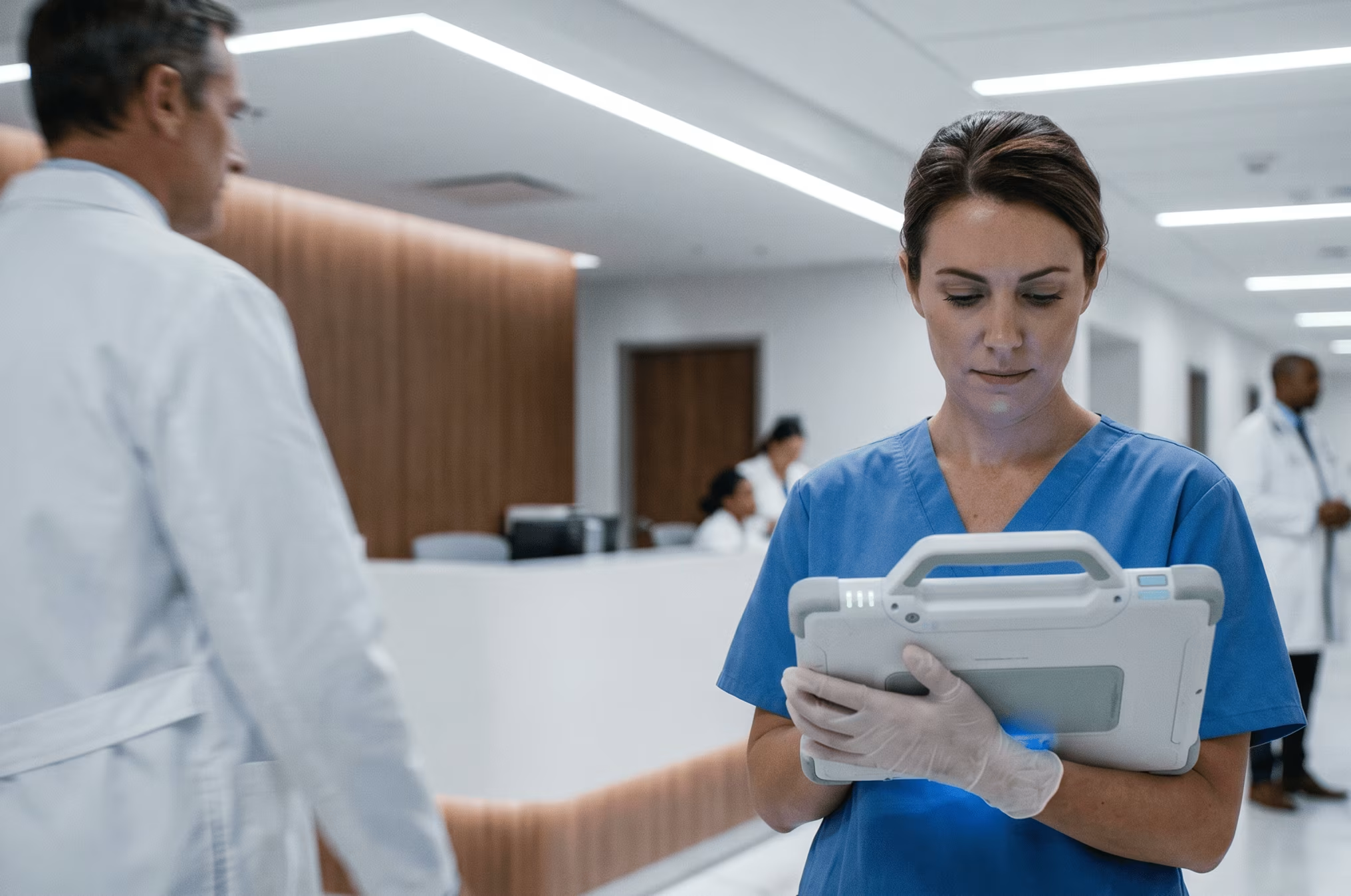
Inspection personnel carry tablets.
Today, each of these systems often generates its own operational data.
With Juxta integrated directly into these devices, organizations can create a unified operational view showing how every connected device moves throughout the facility.
Rather than tracking isolated systems, warehouse managers gain visibility into the interaction between people, vehicles, and automation.
Improving Forklift Operations
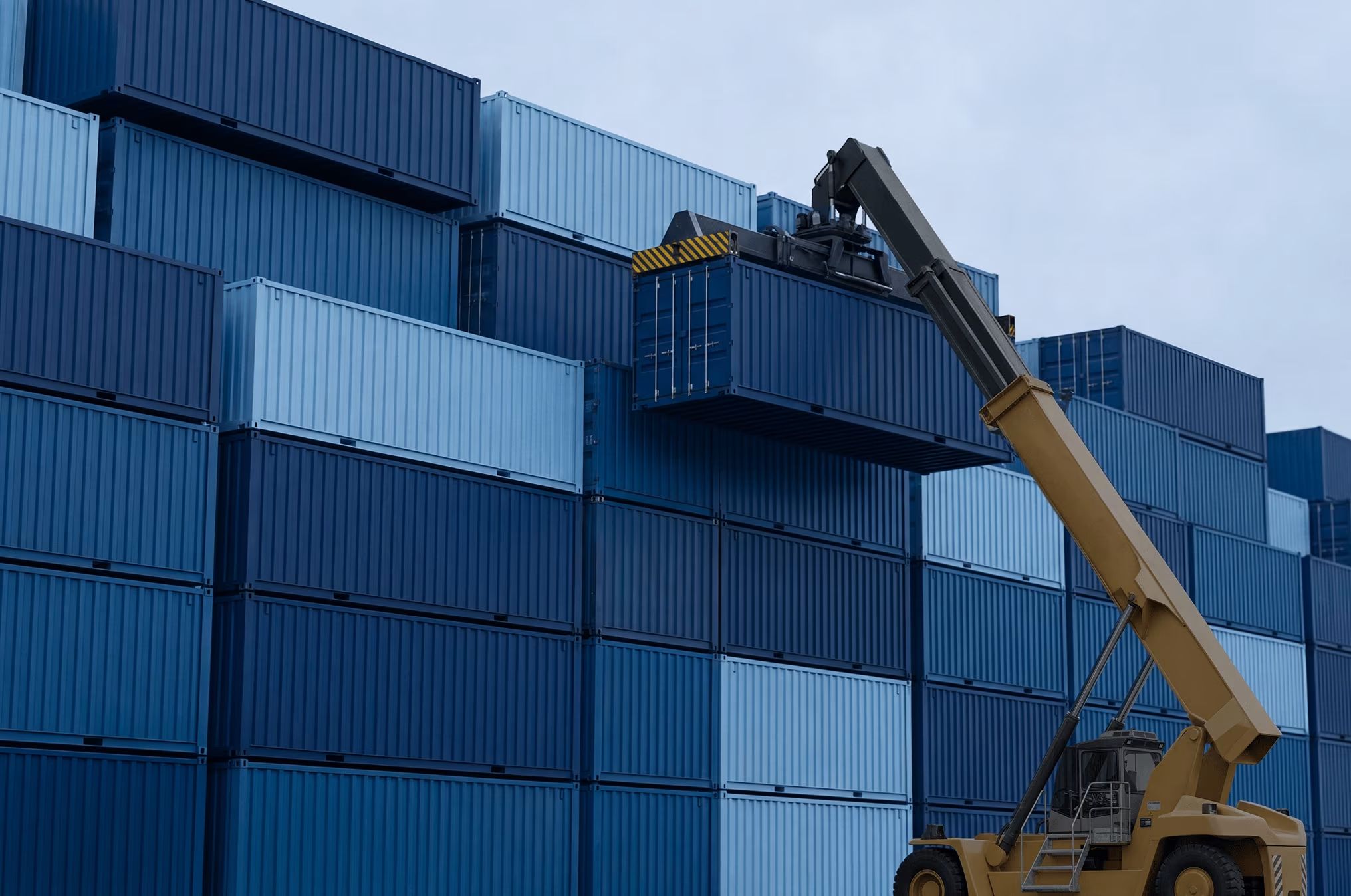
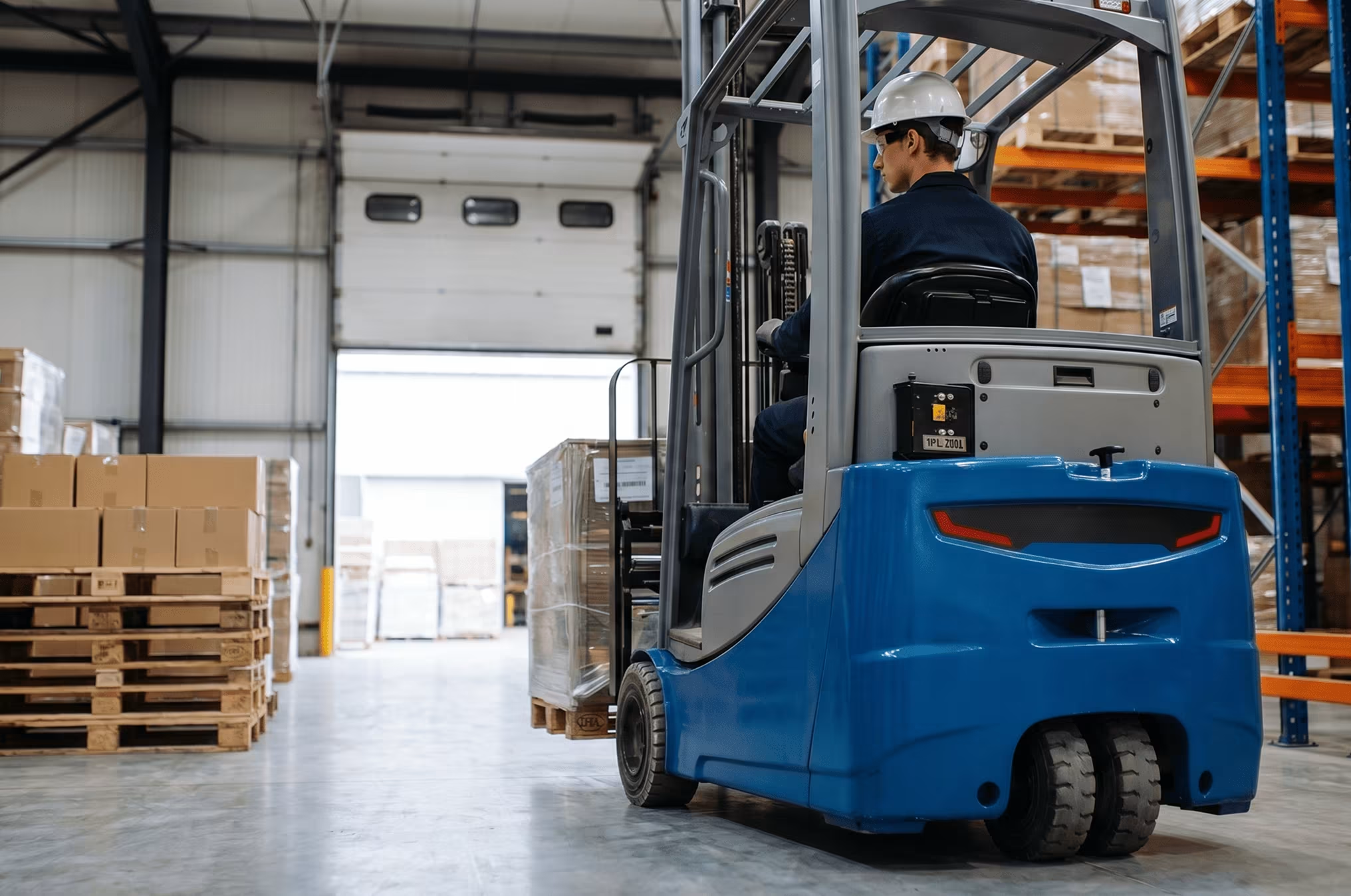
Forklifts remain one of the most critical—and expensive—resources in warehouse operations.
Many fleets already include onboard tablets used for task management, navigation, inventory updates, or fleet management.
By integrating Juxta directly into these existing systems, organizations can continuously understand forklift movement throughout a warehouse.
This creates opportunities to analyze:
- Travel routes
- Congestion around intersections
- Waiting time at docks
- Queue formation
- High-traffic aisles
- Utilization throughout each shift
- Travel distance between assignments
Rather than relying solely on utilization reports, managers gain a much deeper understanding of how forklifts move through the facility and where operational delays originate.
Better Visibility Into Workforce Movement
Warehouse associates already carry mobile devices for picking, scanning, inventory management, and communication.
Adding positioning through software allows those same devices to provide operational context without changing employee workflows.
Managers can better understand:
- Walking distance by role
- Time spent traveling versus performing work
- Frequently traveled routes
- Congested work areas
- Coverage across large facilities
- Response times to operational events
- Movement between work zones
Importantly, this information is valuable not because it tracks individuals, but because it helps explain how warehouse processes function.
For example, if order fulfillment slows during a particular shift, movement data may reveal that employees are spending substantially more time walking due to temporary inventory relocations or increased congestion near packing stations.
Those operational insights are often difficult to obtain through productivity reports alone.
Enhancing Robot Coordination
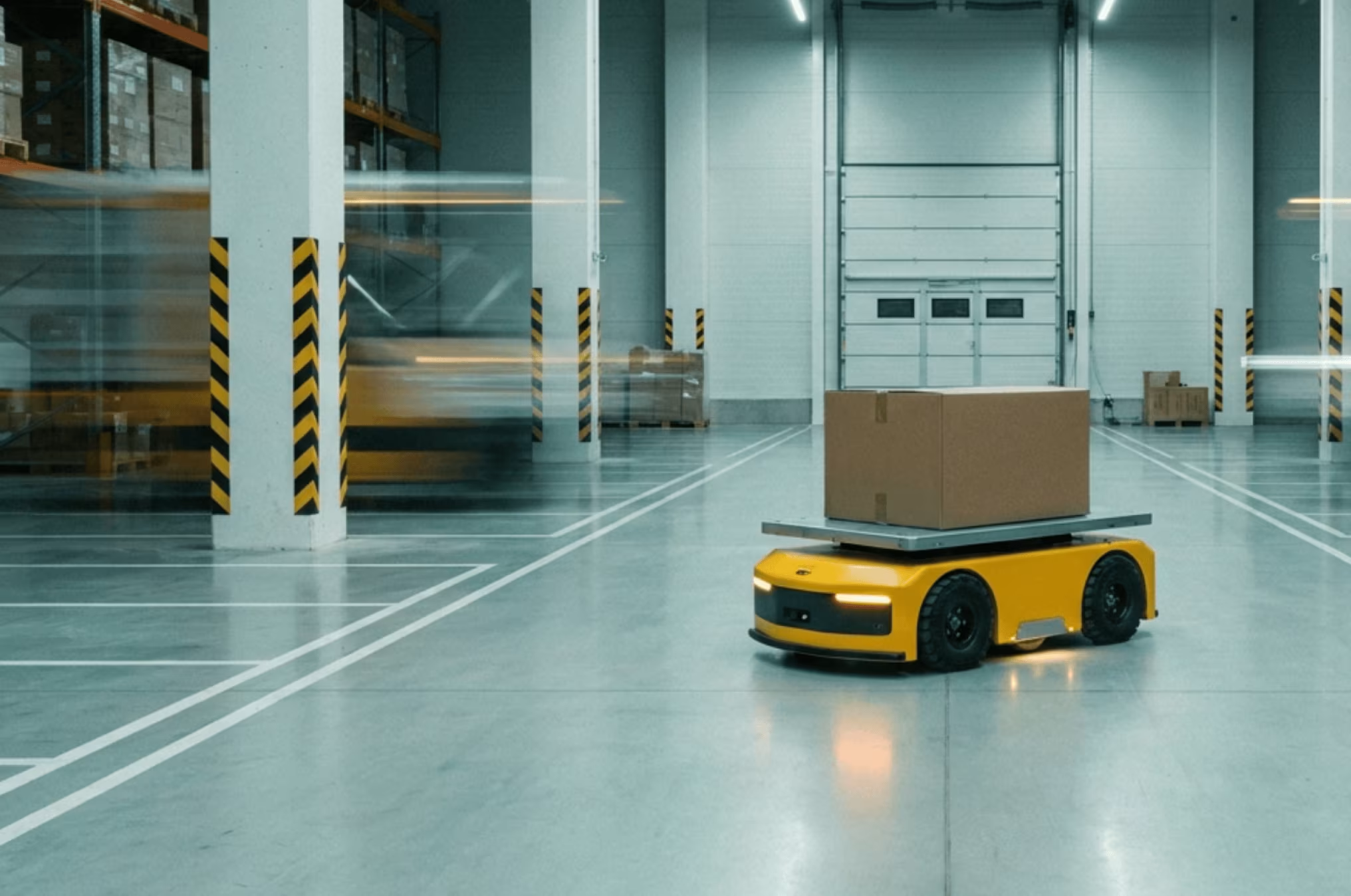
Modern warehouses increasingly rely on Autonomous Mobile Robots to transport inventory, replenish stock, and support picking operations.
Although robots generate large amounts of operational data, they typically operate within their own software environments.
Integrating Juxta into robotic platforms allows their movement to be viewed alongside the rest of the warehouse operation.
This creates opportunities to better understand:
- Human-robot traffic patterns
- Shared aisle congestion
- Robot utilization
- Route efficiency
- Queue formation
- Operational bottlenecks
- Interactions between automated and manual workflows
Instead of optimizing robot fleets independently, organizations can optimize movement across the warehouse as a whole.
Turning Movement Into Operational Intelligence
One of the greatest benefits of software-based positioning is that it continuously generates operational data that previously did not exist.
Over weeks and months, movement patterns begin to reveal opportunities for improvement.
For example:
A warehouse may discover that forklift traffic consistently slows near a receiving dock every afternoon because outbound staging overlaps with inbound deliveries.
Another facility may find that order pickers routinely walk significantly farther than expected because frequently ordered inventory is stored in low-accessibility locations.
A robotics team may observe that AMRs repeatedly encounter delays at specific intersections where pedestrian traffic peaks during shift changes.
These insights emerge naturally from movement data without requiring manual observation or dedicated time studies.
Integrating Into Existing Warehouse Systems
Juxta is designed as a positioning platform rather than a standalone application.
Location data can be integrated into existing warehouse software, including:
- Warehouse Management Systems (WMS)
- Warehouse Execution Systems (WES)
- Robotics Fleet Management platforms
- Fleet management software
- Labor management systems
- Business intelligence platforms
- Digital twin applications
- Custom operational dashboards
This allows organizations to enrich existing workflows with continuous location information instead of replacing software already in use.
For example, a warehouse manager reviewing order fulfillment metrics can also understand how travel distance, congestion, or workforce movement influenced performance.
Built for Warehouses That Evolve
Warehouse layouts are constantly changing.
Racking is reconfigured.
Temporary staging areas appear.
Picking zones expand.
Automation is introduced.
Seasonal inventory shifts throughout the building.
Because Juxta's SDK operates on existing devices rather than relying on infrastructure installed throughout the facility, organizations can adapt to these operational changes without redesigning a positioning network.
New facilities can be deployed using the same software integration, making it practical to scale across regional distribution centers, fulfillment operations, manufacturing warehouses, and logistics campuses.
Juxta is the Future of Logistics Intelligence
The future of warehouse visibility is increasingly software-defined.
Most warehouses already possess the hardware needed to understand how people, forklifts, and robots move throughout their facilities. The missing piece is a positioning layer that can transform those devices into a continuous source of operational intelligence.
By integrating directly into existing smartphones, rugged handhelds, forklift tablets, robotics platforms, and other IMU-equipped devices, Juxta enables organizations to build a comprehensive view of warehouse operations without deploying dedicated positioning infrastructure or new tracking hardware.
The result is more than real-time location. It is a deeper understanding of how work moves through a warehouse—providing the insights needed to improve productivity, reduce congestion, optimize workflows, and support better operational decisions using the technology already in place.